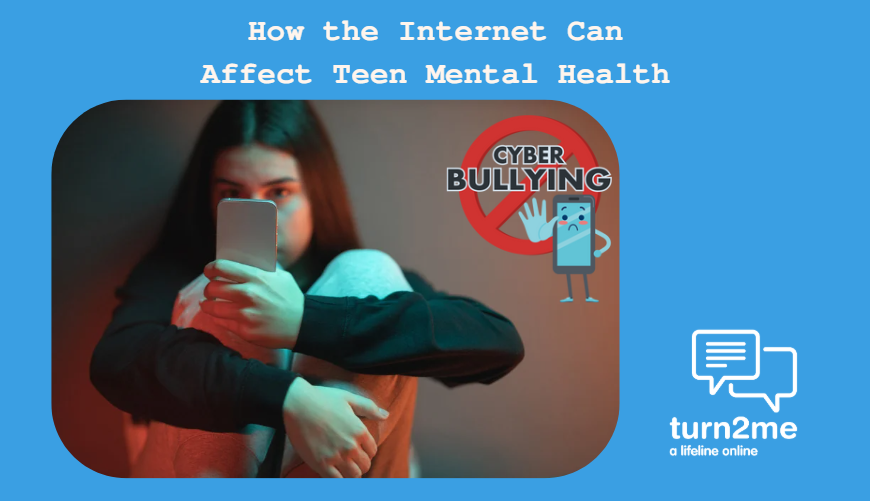

This article explains that many teenagers struggle with their mental health, and that the internet and social media can sometimes make things worse.
Being a teenager is already a challenging time. Young people are figuring out who they are, dealing with school pressure, friendships, body image, and the future. On top of this, most teenagers today are online almost all the time, which brings both positives and risks.
The good side of the internet
The internet can help teens:
- Stay in touch with friends and family
- Learn and do schoolwork
- Find communities where they feel they belong
- Express themselves through music, videos, gaming, or art
For many young people, especially during COVID‑19, the internet helped them feel less alone.
The difficult side of being online
Too much time online, especially on social media, can lead to problems such as:
- Feeling bad about themselves or their body
- Comparing themselves to others
- Feeling left out or not good enough
- Anxiety, low mood, or sadness
- Stress from always being “available” online
Social media often shows an unrealistic version of life. People usually post only the best moments, edited photos, and happy experiences. Teens can forget this isn’t real life and start to feel they don’t measure up.
Cyberbullying
Cyberbullying means being bullied online through messages, social media, gaming platforms, or group chats. This can include:
- Name‑calling or insults
- Rumours being spread
- Being threatened
- Being pressured to send private photos
- Having private images shared without consent
Cyberbullying can be very upsetting and can seriously affect a young person’s mental health, confidence, school life, and relationships.
What helps protect teen mental health
Teens do better when:
- They can talk openly with a parent, carer, or trusted adult
- They learn healthy online habits (not constantly scrolling or checking apps)
- They understand that not everything online is real
- They know it’s okay to ask for help if something online upsets them
Feeling supported, listened to, and believed makes a big difference.
What Irish Research Tells Us
Recent Irish studies show that these issues are very real for young people in Ireland.
Social media and mental health in Ireland
A large study by the HSE Department of Public Health looked at over 4,500 Irish teenagers aged 15–16. It found that:
- Teens who spend 4 or more hours a day on social media are about 60% more likely to have mental health difficulties than those who spend about an hour a day [breakingnews.ie]
- Girls reported poorer mental health than boys, with over 4 in 10 girls saying their mental health was “bad” or “very bad” [breakingnews.ie]
Cyberbullying in Ireland
Irish research shows:
- Around 1 in 4 Irish teens say they have experienced cyberbullying [spunout.ie]
- Girls are almost twice as likely as boys to report being bullied online [breakingnews.ie]
- Many young people don’t tell adults when they are bullied online. One Irish report found that most parents were unaware when their child had been cyberbullied [tudublin.ie]
Pressure to share images
The same Irish study found that:
- One‑third of Irish teens said they had been asked to send a sexual image
- Nearly 1 in 5 said an image of them had been shared without consent
These experiences were strongly linked with poorer mental health [breakingnews.ie]
Feeling alone online
Research from CyberSafeKids shows:
- Many children and teens experience upsetting or worrying content online
- Almost half don’t tell a parent when something online upsets them, especially as they get older [cybersafekids.ie]
Key Takeaway
Children and teenagers in Ireland are growing up online. While the internet can be helpful, too much unsupervised or stressful online activity can seriously affect mental wellbeing.
What helps most is:
- Open conversations
- Feeling safe to speak up
- Knowing support is available
- Learning healthy boundaries with technology
If a young person feels overwhelmed, anxious, bullied, or low, they’re not weak and they’re not alone. Support can make a real difference.